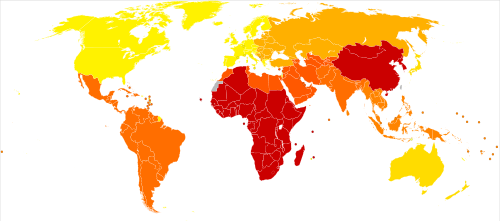
Environmental risk factors and medical conditions associated
with Bipolar
disorder In addition to the genes implicated in Bipolar disorder,
a number of environmental risk factors including famine and viral infection
have been decribed. These are listed in this table with reference links
to Wikipedia and Pubmed.Ongoing clinical trails, worldwide, can be interrogated
at
ClinicalTrials.Gov a service of the US National Institutes of Health
Publications related to this page:
Multiple genes and factors associated with bipolar disorder converge
on growth factor and stress activated kinase pathways controlling translation
initiation: implications for oligodendrocyte viability Neurochem
Int. 2007 Feb;50(3):461-90..
Toxoplasmosis and polygenic diseases: Extensive T.Gondii host/pathogen
interactome enrichment in nine psychiatric or neurological disorders
J.Pathogens,
2012
Susceptibility genes are enriched in those of the herpes simplex virus
1/host interactome in psychiatric and neurological disorders Pathog
Dis. 2013 Aug 3. doi: 10.1111/2049-632X.12077.
Low birthweight for pre-term births can be a risk factor in later
life Laursen
et al, 2007
Diverse perinatal risk factors (drugs and birth complications) can
increase the risk of pediatric bipolar disorderPavuluri
et al, 2006
Prenatal infection during the first trimester (Influenza or common
cold) have been associated with subsequent cycloid psychosis in the
offspring Stober
et al, 1997
A significant, increase in the risk of Bipolar disorder in the offspring
after exposure to maternal influenza at any time during pregnancy (odds
ratio = 3.82) Parboosing
et al, 2013.
An excess of winter/spring births has been observed for Bipolar disorder
and schizophrenia Torrey
et al, 1997
Maternal stress during the first trimester (Arab-Israeli War) associated
with an increased risk of bipolar disorder and other affective disorders
in the offspring Kleinhaus
et al, 2013
Reduced maternal levels of common viruses during pregnancy predict
offspring psychosis suggesting that enhanced immune activation rather
than any particular virus might be considered a risk factor Canuti
et al, 2015
Simian cytomegalovirus-related stealth virus has been found in the
cerebrospinal fluid of a patient with bipolar psychosis and acute encephalopathy
Martin,
1996.
Cytomegalovirus infection and immune activation may contribute to
exacerbation of impulsive behavior in bipolar disorder Prossin
et al, 2013.
Seropositivity for influenza A influenza B and coronaviruses were
associated with a history of mood disorders but not with the specific
diagnosis of unipolar or bipolar depression Okusaga
et al, 2011
Retroviral HERV-W env transcription elevated in bipolar disorder and
schizophrenia Perron
et al, 2013
anti-Saccharomyces cerevisiae antibodies have been associated with
bipolar disorder (odds ratio 3.5-4.4) , correlating with food antibodies
(gluten, casein) and , in a recent onset psychosis bipolar disorder
group, with measles and T. gondii immunoglobulin G Severance
et al, 2013
Activated kynurenine metabolism in fibroblasts from bipolar and schizophrenia
patients. Cytokine challenge increases 3-hydroxykynurenine production
Johansson
et al, 2013
KMO Arg(452) polymorphism associated with increased levels of CSF
kynurenic acid and reduced lymphoblastoid and hippocampal KMO expression
Lavebratt
et al, 2014
Casein-related immune activation may relate to the psychosis and mania
components of Bipolar disorder Severance
et al, 2010
Individuals with bipolar disorder have increased levels of IgG antibodies
to gliadin Dickerson
et al, 2011
Individuals with epilepsy, multiple sclerosis, migraine and circulatory
disorders may have a higher prevalence of bipolar disorder McIntyre
et al, 2007
Prior depression increases the risk of subsequently developing bipolar
disorder Gilman
et al, 2012
Association with liver diseases, including hepatitis C and alcohol-related
cirrhosis Fuller
et al, 2011
Substance abuse and social
An urban environment can contribute to the psychosis aspects of Bipolar
disorder Kaymaz
et al, 2006
Elevated daytime cortisol levels in late adolescence may be a risk
factor for subsequent affective disorders Ellenbogen
et al, 2011.
Hypovitaminosis (Vitamin D) is associated with bipolar disorder Cherniak
et al, 2009
Elevated homocysteine levels have been associated with bipolar disorder
Dias
et al, 2009
Glutathione depletion is common in bipolar and many other disorders.
Precursor treatment with N-acetyl cysteine has been reported to be effective
in bipolar disorder Magalhães
et al, 2011
Patients with bipolar disorder may die prematurely from multiple causes,
including cardiovascular disease, diabetes, COPD, influenza or pneumonia,
unintentional injuries, and suicide. However, chronic disease mortality
among those with early diagnosis approached that of the general population,
suggesting that better provision of primary medical care may reduce
premature mortality (National cohort study of 6,587,036 Swedish adults,
including 6618 with bipolar disorder) Crump
et al, 2013
Comorbidity with accelerated atherosclerosis and early cardiovascular
disease Goldstein
et al, 2015
Increased serum S100B protein in drug-free bipolar patients during
first manic episode
Machado-Vieira et al, 2002
Higher numbers of circulating activated T cells and raised soluble
IL2R levels in euthymic, manic, and depressed bipolar patients Breunis
et al, 2003
Serum neurotrophin-3 increased during manic and depressive episodes
in bipolar disorder Walz
et al, 2007.
Increased serum prolidase activity in bipolar patients Selek
et al, 2011
Serum sCD25 levels and percentages of anti-inflammatory CD4(+)CD25(high)FoxP3+
regulatory T cells were higher bipolar patients <40 years of age.
CCL2 and PTX3 were raised in serum Drexhage
et al, 2007
 Subscribe
to RSS feed
Subscribe
to RSS feed