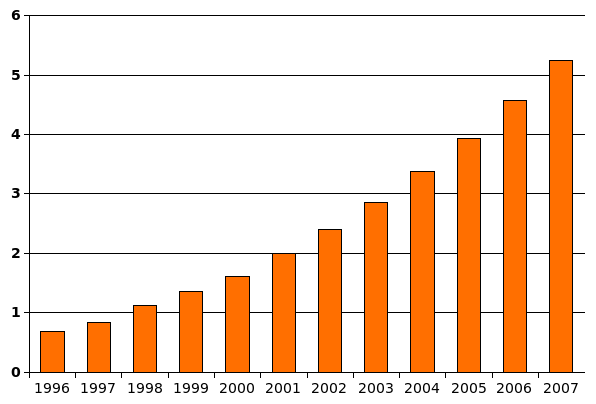
As with all risk factors, these do not cause Autism: they
add an element of risk and may act in synergy with other risk factors
or susceptibility genes. Their risk promoting ability may be increased
or decreased by these other factors. Nevertheless, autism is increasing
at an alarming rate, a factor that is unlikely to be gene-related. These
risk factors, and the genes, form the components of a puzzle, whose assembly
will one day alow us to see the whole picture Autism
books ... The
Autism Birth Cohort project..... Autism
genetic Ressource exchangeHealing
Thresholds Autism Therapy
Environmental risk factors and medical conditions associated
with Autism
Ongoing clinical trails, worldwide, can be interrogated at
ClinicalTrials.Gov a service of the US National Institutes of Health
Susceptibility to autism has moderate genetic heritability and a substantial
shared twin environmental component Hallmayer
et al, 2011
Autism genes are selectively targeted by environmental pollutants
including pesticides, heavy metals, bisphenol A, phthalates and many
others in food, cosmetics or household products Carter
and Blizard, 2016
The barrier, airway particle clearance, placental and detoxification
functions of autism susceptibility genes.Carter
, 2016
There is an altered expression of genes associated with blood-brain
barrier integrity in the autism brain coupled with increased neuroinflammation
and possibly impaired gut barrier integrity Fiorentino
et al, 2016.
Maternal bacterial infections requiring hospitalisation or multiple
infections during pregnancy associated with autism in the offspring
Zerbo
et al, 2015
Viral infection necessitating maternal hospitalisation in the
first trimester or maternal bacterial infection in the second trimester
associated with autism Atladottir
et al, 2010
Maternal hospitalization with infection during pregnancy associated
with autism Lee
et al, 2015
Maternal genital infections or bacterial infections in the third
trimester associated with subsequent development of autism Fang
et al, 2015
Maternal reports of presumed cervical-vaginal infection during
pregnancy Joseph
et al, 2016
Relationships with influenza infection possibly related to maternal
fever rather than the infectious agent Atladottir
et al, 2012
Maternal exposure to second-trimester fever associated with increased
risk of autism: Risk increased markedly with exposure to three or
more fever episodes after 12 weeks' gestation Hornig
et al, 2017
Lower risk of autism asociated with high maternal and newborn
Toxoplasma Gondii IgG levels Grether
et al, 2016
High levels of anti-Toxoplasma Gondii immunoglobulin G prenatally
in mothers and in newborns associated with a lower risk of autism
development: . Low maternal anti-T. gondii IgG was associated with
increased offspring odds of autism: Lowered immunoglobulin levels
may represent suboptimal function of the maternal immune system
or reduced maternal exposure to common infectious agents Spann
et al, 2016
Interaction between maternal infection and copy number variation
in the offspring Mazina
et al, 2015
Fever during pregnancy increases the risk of autism in the offspring
- an effect reduced in those taking antipyretics Zerbo
et al, 2012
A higher percentage of retroviral HERV-H and HERV-W expression has
been reported in peripheral blood mononuclear cells from autism patients
Balestrieri
et al, 2012
Association with a higher prior frequency of the bacterial skin infection
impetigo (caused by Staphylococcus aureus, and less frequently by Streptococcus
pyogenes), has been reported along with infantile feeding problems (vomiting,
reflux, colic and failure to feed)
Whitely, 2004
Increased seroprevalence of toxoplasmosis in autistic children Prandota
et al, 2015
High levels of Herpes virus HSV-2 IgG antibodies in maternal midpregnancy
plasma associated with increased risk of ASD in male offspring Mahic
et al, 2017
Bacteroidetes species exist at high levels in severely autistic children,
while Firmicutes were more predominant in the control group. Smaller,
but significant, differences also occurred in the Actinobacterium and
Proteobacterium phyla. Desulfovibrio species and Bacteroides vulgatus
are present in higher numbers in stools of severely autistic children
Finegold
et al, 2010
Children with autism had lower levels of species of Bifidobacter,
higher levels of species of Lactobacillus , but similar levels of other
bacteria and yeast Adams
et al, 2011
The autism children microbiome contained a higher number of Clostridium
spp. and a lower number of bifidobacteria compared to non-autistic children
Grimaldi
et al, 2016
Autistic subjects with gastrointestinal disease harbor higher counts
of Clostridium perfringens in their gut (higher counts of beta2-toxin
gene-producing C. perfringens) Finegold
et al, 2017
Lower abundances of Prevotella, Coprococcus, and unclassified Veillonellaceae
genera in autistic samples ( carbohydrate-degrading and/or fermenting
bacteria) Kang
et al, 2013
Numbers of Sutterella species. are elevated in faeces of ASD children
relative to controls Wang
et al, 2013
Enzyme-catalyzing reactions involved with glutamate under-represented
in the autism microbiome Heberling
and Dhurjati, 2015
fluconazole-resistent Candida krusei and Candida glabrata isolated
from stool samples of autistic children Kantarcioglu
et al, 2015
Urinary 3-(3-Hydroxyphenyl)-3-hydroxypropionic Acid, 3-Hydroxyphenylacetic
Acid, and 3-Hydroxyhippuric Acid elevated in Children with Autism Spectrum
Disorders : oral vancomycin treatment, decreased the urinary excretion
of these indication that these compounds may also be from gut Clostridium
species Xiong
et al, 2016
Urinary metabolites: Autistic children show diversion of tryptophan
metabolism to xanthurenic acid and quinolinic acid , at the expense
of kynurenic acid and of melatonin. The gut microbiome contributes to
altered tryptophan metabolism, yielding increased levels of indolyl
3-acetic acid and indolyl lactate Gevi
et al, 2016.
Strains of Clostridium species and enterococci were isolated more
frequently from stool samples of autistic children and rarely lactobacilli.Ekiel
et al, 2010
Faecal samples of ASD infants had significantly higher levels of Faecalibacterium
and lower abundance of Blautia genera Inoue
et al, 2016
High levels of Candida species(C.albicans; C.krusei and C. glabrata
isolated in the stool of autistic children Kantarcioglu
et al, 2016
Duodenal nicrobiome: Bacteria belonging to the Burkholderia genus
were more abundant in subjects with autism: members of the Neisseria
genus were less abundant. A relative decrease in abundance of two Bacteroides
species and Escherichia coli was found in autistic individuals. There
was a positive correlation between the abundance of Clostridium species,
and disaccharidase activity, in autistic individuals Kushak
et al, 2016.
A significant increase in several mucosa-associated Clostridiales
was observed in autism subjects with functional gastrointestinal disorders:
marked decreases in Dorea and Blautia, and Sutterella, were evident
Luna
et al, 2016
decrease in the relative abundance of Alistipes, Bilophila, Dialister,
Parabacteroides, and Veillonella in the ASD cohort, while Collinsella,
Corynebacterium, Dorea, and Lactobacillus were significantly increased.
Strati
et al, 2017
Vaccinations
Hepatitis B vaccination of male neonates has been associated with
an increased risk of autism Gallagher
and Goodman
Thiomersal
(organic mercury) in vaccines has been linked to autism and a comparison
between organic mercury containing and non-containing vaccines using
the Vaccine Adverse
Event Reporting System suggested a number of associations with significantly
increased odds ratios for autism (OR = 1.8, p < .05), mental retardation
(OR = 2.6, p < .002), speech disorder (OR = 2.1, p < .02), personality
disorders (OR = 2.6, p < .01), and thinking abnormality (OR = 8.2,
p < .01) Geier
and Geier, 2004.
Thimerosal has been shown to be more toxic in female mice Branch,
2009 and further research may be needed
A family history of Pink disease (infantile acrodynia),
related to mercury poisoning has been linked to autism Shandley
and Austin, 2011.
Autoantibodies (IgG isotype) to neuron-axon filament protein (NAFP)
and glial fibrillary acidic protein (GFAP)
are significantly increased in autistic patients (Singh
et al., 1997)
Autoantibodies to GABAergic Golgi neurons of the cerebellum Rossi
et al, 2011
Antibodies to a 45 kDa cerebellar protein and other cerebellar proteins
raised maternally
Goines et al, 2011
Antibodies to gliadin, a component of gluten, and to cerebellar peptides
have been observed Vojdani
et al, 2004
Antibodies to casein, lactalbumin and beta-lactoglobulin have been
found in autism where symptoms were improved by milk and wheat free
diets Lucarelli
et al 1995 see also Kawashti
et al, 2006
Antibodies to brain elements, related to herpes viral infection have
been decribed in autism , particularly Herpes virus HSV-2Mora
et al, 2009
Plasma concentrations of the cytokines IL1B, IL1RA, IL5, IL8, IL12,
IL13, IL17 and GRO-alpha are higher in autism spectrum disorder subjects
Suzuki
et al, 2011
A humoral immunity profile, described by three binary variables, IgA
< 0.97 g/l, IgE > 36 IU/ml, and IgG > 6.3 g/l, was able to
identify children with autism Wasilewska
et al, 2012.
Maternal autoantibodies associated with autism spectrum disorders
may affect brain development Nordahl
et al, 2013
Lactate dehydrogenase A and B (LDH), guanine deaminase (GDA/cypin)
, stress-induced phosphoprotein 1 (STIP1), collapsin response mediator
proteins 1 and 2 (CRMP1, CRMP2) and Y-box-binding protein described
as the primary antigens of maternal autoantibody-related autism.Braunschweig
et al, 2013
Autoantibodies to cardiolipin, ß 2-glycoprotein 1 ( apolipoprotein
H APOH) , and phosphoserine Careaga
et al, 2013
Mothers of an autistic child four times more likely to possess anti-brain
autoantibodies than unselected women of child-bearing age Brimberg
et al, 2015
Prenatal factors and Birth related
Pollutants and drugs
Prenatal and perinatal paracetamol (acetaminophen) exposure heve
been correlated with autism Bauer
and Kriebel, 2013
Organochlorine pesticide applications--specifically dicofol and
endosulfan--occurring immediately before and during central nervous
system embryogenesis have been associated with the subsequent development
of autism spectrum disorders Roberts
et al, 2007
A Finnish study has noted an association between prenatal exposure
to persistent organic pollutants (Polychlorinated biphenyls and
Dichlorodiphenyldichloroethylene related ) and autism (combined
pollution level rather than any particular pollutant) Cheslack-Postava
et al, 2013
ASD risk was elevated for a number of polychlorinated biphenyl
congeners, particularly for PCB138/158 and PCB153 Lyall
et al, 2016
Maternal exposure to exhaust and combustion products or disinfectants
associated with autism Windham
et al, 2013
Prenatal exposure to valproic acid, ethanol, thalidomide and misoprostol
has been shown to be associated with an increased incidence of autism
Dufour-Rainfray
et al, 2011
Prenatal exposure to serotonin uptake inhibitor antidepressants
during the first trimester has been associated with autism Croehn
et al, 2011
Preconception use of antidepressants may also be associated
with autism suggesting that maternal psychiatric disorders in
treatment before pregnancy rather than antenatal exposure to
antidepressants could play a role in the risk for Autism spectrum
disorders Mezzacappa
et al, 2017
The use of prenatal vitamins may reduce the risk of having children
with autism, especially for genetically susceptible mothers and
children Schmidt
et al, 2011
Prenatal Polycyclic Aromatic Hydrocarbon (PAH) Exposure has been
associated with autism and related disorders Perera
et al, 2012
Prenatal exposures to lacquer, varnish, or xylene have been associated
with autism McCanlies
et al, 2012
Parental exposure to night work, handling of solvents and/or electromagnetic
fields has been associated with an increased incidence of autism
in the children Pino-López
and Romero-Ayuso , 2013
Polybrominated diphenyl ether-28 or trans-nonachlor levels in
maternal blood or urine during pregnancy associated with the subsequent
development of autism in children Braun
et al, 2014
Pre-pregnancy obesity or excessive weight gain during pregnancy may
increase the risk of autism in the offspring
Dodds et al, 2010
Maternal obesity (BMI =30) weakly associated with ASD risk : Paternal
obesity associated with an increased risk of autistic disorder and Asperger
disorder Surén
et al, 2014.
Higher risks for autism among those conceived in winter months suggest
the presence of environmental causes of autism that vary by season Zerbo
et al, 2011.
Interactions between the 5-HTTLPR
gene (serotonin
transporter) or COMT
(catechol-O-methyltransferase) maternal smoking and low birthweight
have been associated with autism risk Nijmeijer
et al, 2010
Nine risk factors showed significant association with autism: maternal
second-hand smoke exposure, maternal chronic or acute medical conditions
unrelated to pregnancy, maternal unhappy emotional state, gestational
complications, edema, abnormal gestational age (<35 or >42 weeks),
nuchal
cord, Number of pregnancies >1, and advanced paternal age at
delivery (>30 year-old)". Zhang
et al, 2010
Increased concentrations of interferon-gamma, interleukins IL-4 and
IL-5 in midgestation maternal serum has been associated with a 50% increased
risk of autism in the offspring Goines
et al, 2011
Higher parental age has been associated with Autism spectrum disorders.
Ben
Itzchak et al, 2011.
Periconceptional use of prenatal vitamins may reduce the risk of having
children with autism ( an effect conditioned by genes in folate and
one carbon metabolism pathways : MTHFR, CBS, COMT) Schmidt
et al, 2011
Maternal diabetes and obesity have been associated with autism in
the offspring Krakowiak
et al, 2012
Severe, early gestation maternal hypothyroxinemia is associated with
autistic symptoms in the offspring Román
et al, 2013
Induced childbirth has been associated with autism in the offspring
Gregory
et al, 2013
Elevated progesterone, 17a-hydroxy-progesterone, androstenedione and
testosterone as well as cortisol in utero related to autism in the offspring
Baron-Cohen
et al, 2014
Maternal chemical intolerance associated with ADHD and autism in the
offspring Heilbrun
et al, 2015
Prenatal exposure to maternal abuse by partner associated with autism
in the offspring Roberts
et al, 2015
Maternal polycystic ovary syndrome associated with an increased risk
of autism in the offspring, a risk augmented by maternal obesity Kosidou
et al, 2015 see also Cherskov
et al, 2018
Increased risk of autism in children of mothers with systemic lupus
erythematosus Vinet
et al, 2015
Consumption of large fatty fish during pregnancy improves cognitive
functioning and provdes some protection from autism-spectrum traits
in the offspring Julvez
et al, 2016.
Mothers of children with autism spectrum disorders + intellectual
disability had significantly elevated mid-gestational levels of numerous
cytokines and chemokines, (granulocyte macrophage colony-stimulating
factor, interferon-gamma, interleukin-1a and IL-6 Jones
et al, 2016
Maternal CRP levels in mid-pregnancy were lower in mothers of ASD
compared with controls Zerbo
et al, 2016.
Ultrasound : male children with ASD, copy number variations , and
exposure to first trimester ultrasound had significantly decreased non-verbal
IQ and increased repetitive behaviors relative to male children with
ASD, with CNVs, and no ultrasound (gene/environment) Webb
et al, 2016
In a large swedish study , for mothers using ultrasound between
1999 and 2003, no effect of ultrasound was seen. See discussion
in Höglund
Carlsson et al, 2016
Hyperbilirubinemia in perinatal and prenatal periods associated with
autism Guinchat
et al, 2012
Maternal obesity before pregnancy is a risk factor for ADHD in children.
Maternal obesity as well as underweight may also be associated with
an increased risk for Autism spectrum disorders Andersen
et al, 2017.
An association of maternal hirsutism with child ASD is consistent
with the hypothesis that androgens may be involved in the etiology of
autism Lee
et al, 2017
Progesterone treatment during pregnancy increases the risk of developing
autism in the offspring Davidovitch
et al, 2018
Proximity to industries releasing arsenic, lead or mercury linked
to autism spectrum disorder prevalence Dickerson
et al, 2015
Maternal smoking; male gender; economic problems in the family; condensation
on windows, a low ventilation rate in the home; PVC flooring (a source
of airborne phthalates)
: airway symptoms of wheezing and asthma have been associated with autism
risk
Larsson et al, 2009
The rate of autism is higher for schools near Superfund
sites (those earmarked for pollution clean-up) DeSoto,
2009
DDT (the pesticide dichlorodiphenyltriichloroethene) , has been associated
with autism Audouze
and Grandjean 2011
Maternal levels of the DDT metabolite p,p'-dichlorodiphenyl dichloroethylene
(p,p'-DDE) increase the risk of autism in the offspring Brown
et al, 2018
Both prenatal and postnatal exposures to particulate matter (PM2.5)
are associated with an increased risk of ASD Talbott
et al, 2015
2,3,7,8-Tetrachlorodibenzo-p-dioxin, a contaminant of agent orange
has been associated with autistic traits in Vietnam Nishijo
et al, 2014
CHARGE study
(Childhood Autism Risks from Genetics and the Environment) : Proximity
to organophosphates at some point during gestation was associated with
a 60% increased risk for autism spectrum disorders, higher for 3rd trimester
exposures [Odds ratio (OR) = 2.0, 95% ], and 2nd trimester chlorpyrifos
applications: OR = 3.3 Children of mothers residing near pyrethroid
insecticide applications just prior to conception or during 3rd trimester
were at greater risk for both ASD and developmental delay , with OR’s
ranging from 1.7 to 2.3. Risk for developmental delay was increased
in those near carbamate applications, but no specific vulnerable period
was identified Shelton
et al, 2014.
Sleeping in clean-room conditions has been reported to improve autism
symptoms Faber
et al, 2015
Higher urinary levels of bisphenol A in autistic children Stein
et al, 2015
Higher urinary levels of lead, tin, thallium and antimony in autistic
subjects Adams
et al, 2017
Rotenone and certain fungicides, including pyraclostrobin, trifloxystrobin,
famoxadone and fenamidone, produce transcriptional changes in vitro
that are similar to those seen in brain samples from humans with autism,
advanced age and neurodegeneration (Alzheimer's disease and Huntington's
disease). Pearson
et al, 2016
High levels of urinary mycotoxins (deoxynivalenol and de-epoxydeoxynivalenol)
and serum mycotoxins (aflatoxin M1, ochratoxin A and fumonisin B1) in
autistic children De
Santis et al, 2017
Mean serum-level of common organic pollutants is predictive
of behavioral severity in children with autism spectrum disorders.The
study included pesticides, polychlorinated biphenyls and solvents, many
of which were also found in the control group. Boggess
et al, 2016
Green space, specifically tree cover in areas with high road density
reported to decrease autism prevalence Wu
and Jackson, 2017
Dietary factors
High fructose corn syrup has been linked to the development of autism
and related disorders Dufault
et al, 2012
Autism is more common in areas of impaired UVB penetration away from
the equator, urban areas, areas with high air pollution, and areas of
high rainfall. Autism is more common in dark-skinned persons and severe
maternal vitamin D deficiency is exceptionally common the dark-skinned.Cannell,
2008
Vitamin D treatment has been reported to ameliorate both autism and
schizophrenia symptoms in some cases Humble
et al, 2010
Low vitamin E and A plasma values indicate lower consumption of food
rich in vitamin A and Vitamin
E (e.g. whole-grain products, plant oils, oil seeds, nuts, fat spreads
and dairy products).Krajcovicova-Kudlackova
et al, 2009
High mercury levels have been implicated in autism Geier
et al, 2010
High plasma levels of thioredoxin , thioredoxin reductase and peroxiredoxins
(PRDX1 and PRDX3) have been recorded in autistic children together with
a reduction in plasma glutathione s transferase activity Al-Yafee
et al, 2011 High levels of thioredoxin correlate with the autism
score Zhang
et al, 2014
High levels of urinary homocysteine have been reported in autism suggesting
deficiencies of folic acid and vitamins B6 and B12 Kaluzna-Czaplinska
et al, 2011
High fasting serum homocysteine and low folate and vitamin B12 levels
could be used as clinical biomarkers for an early diagnosis and management
of autism Ali
et al, 2011.
Increased serum androstenedione in adults with autism spectrum conditions.Ruta
et al, 2011
Increased urinary excretion of N-methyl-2-pyridone-5-carboxamide,
N-methyl nicotinic acid, and N-methyl nicotinamide suggest malfunction
of the tryptophan-nicotinic acid metabolic pathway.higher levels of
urinary taurine and lower levels of urinary glutamate, indicate perturbation
in sulfur and amino acid metabolism: Changes in mammalian-microbial
cometabolites including dimethylamine, hippurate, and phenyacetylglutamine
also observed Yap
et al, 2010
Gluten- and casein-free diets can be of benefit in some sufferers
Whiteley
et al, 2010
Urinary concentrations of 3-methyl-cyclopentanone, 3-methyl-butanal,
2-methyl-butanal, and hexane under acid conditions, and 2-methyl-pyrazine,
2,3-dimethyl-pyrazine, and isoxazolo under alkaline pH had statistically
higher levels from autistic children Cozzolino
et al, 2014
Elevated saliva levels of prolactin-inducible protein, lactotransferrin,
Ig kappa chain C region, Ig gamma-1 chain C region, Ig lambda-2 chain
C regions, neutrophil elastase, polymeric immunoglobulin receptor and
deleted in malignant brain tumors 1 Ngounou
Wetie et al, 2015
Chronic inflammation of the gastrointestinal tract, dysbiosis, maldigestion,
malabsorption, malnutrition, food intolerance, allergies, chronic viral,
fungal and bacterial infections, impaired kidney function, impaired
detoxification of endo- and exotoxins, disorders of metal ion transportation
have been implicated in autism Cubala-Kucharska,
2010
Children with autism are at risk of developing oral diseases Stein
et al, 2011
Immune conditions, gastrointestinal and sleep disorders, seizure,
obesity, dyslipidemia, hypertension, and diabetes as well as stroke
and Parkinson's disease, significantly more common among adults with
autism Croen
et al, 2005.
Double branching of bronchi in the lower lungs airways, rather than
normal, single branching has been noted in autistic children Stewart
and Klar, 2013
Elevated copro- , hexacarboxyl- and pentacarboxyl-
porphyrin concentrations have been associated with autism Woods
et al, 2010
Children with autism had much lower levels of total short chain fatty
acids including lower levels of acetate, proprionate, and valerate Adams
et al, 2011
Plasma levels of chemokines involved in the T-helper cell immune system
and hematopoiesis were lower in the children with Autism compared with
unrelated siblings without Autism Manzardo
et al, 2011
Plasma and urinary oxalate levels have been reported as increased
in autism spectrum disorders Konstantynowicz
et al, 2011
Low plasma levels of platelet endothelial adhesion molecule-1 and
P-selectin Onore
et al, 2012
High plasma levels of complement factor 1 in autistic children Momeni
et al, 2009
Glutathione imbalance and oxidative stress in peripheral immune cells
Rose
et al, 2012
In newborns who later develop autism, decreased levels of T helper-1(Th-1)-like
cytokines (i.e. Iinterferon gamma) and Th-2like cytokines (i.e. IL-4,
IL-10) suggest a depressed or hypoactive immune cell activity during
the neonatal period Abdallah
et al, 2012
Urinary levels of several amino acids such as glycine, serine, threonine,
alanine, histidine, glutamyl amino acids and taurine were significantly
lower in ASD children. The levels of antioxidants such as carnosine
were also reduced in ASD Ming
et al, 2012
Activating killer-cell immune globulin-like receptor/HLA complexes
are increased whereas inhibitory KIR/HLA complexes are reduced in autistic
children; and more significant in their mothers suggesting immune activation
Guerini
et al, 2013.
Higher urinary levels of succinate and glycolate and lower levels
of hippurate, 3-hydroxyphenylacetate, vanillylhydracrylate, 3-hydroxyhippurate,
4-hydroxyphenyl-2-hydroxyacetate, 1H-indole-3-acetate, phosphate, palmitate,
stearate, and 3-methyladipate Emond
et al, 2013.
Urinary levels of p-cresol ( a bacterial product derived from tyrosine)
reported to be elevated in autistic children Altieri
et al, 2011
Elevated plasma neopterin levels may be associated with autism severity
Zhao
et al, 2015
Activation of the kynurenine pathway of tryptophan degradation and
increased production of quinolinic acid in autistic children Lim
et al, 2015
Elevated levels of tissue plasminogen activator and E-selectin in
male children with autism spectrum disorder Simsek
et al, 2016
Urinary 3-(3-Hydroxyphenyl)-3-hydroxypropionic Acid, 3-Hydroxyphenylacetic
Acid, and 3-Hydroxyhippuric acid are Elevated in children with Autism
.Levels decreased with vancomycin treatment, suggesting origin from
Clostridium species Xiong
et al, 2016.
Increased extra-axial cerebrospinal fluid is detectable at 6 months
in high-risk infants who develop ASD Shen
et al, 2017
Increased urinary levels of hippurate, glycine, creatine, tryptophan,
and d-threitol and decreased concentrations of glutamate, creatinine,
lactate, valine, betaine, and taurine observed in ASD patients Lussu
et al, 2017
High prevalence of iron deficiency and iron deficiency anemia in autism
Gunes
et al, 2017
Myeloid dendritic cells and plasmacytoid dendritic cells elevated
in children with autism spectrum disorders Saad
et al, 2017
DEVNERTOX
Toxic threats to the developing nervous system: in vivo and in vitro studies
on the effects of mixture of neurotoxic substances potentially contaminating
food
HAZMAP A Relational
Database of Hazardous Chemicals and Occupational Diseases
 Subscribe
in a reader
Subscribe
in a reader